What is not allowed in the cruise elegant dress code?
The items and outfits cruise elegant dress codes actually prohibit, from flip-flops and swimwear to shorts, athletic gear, and overly casual beachwear, plus how Miami dinner cruises handle it.
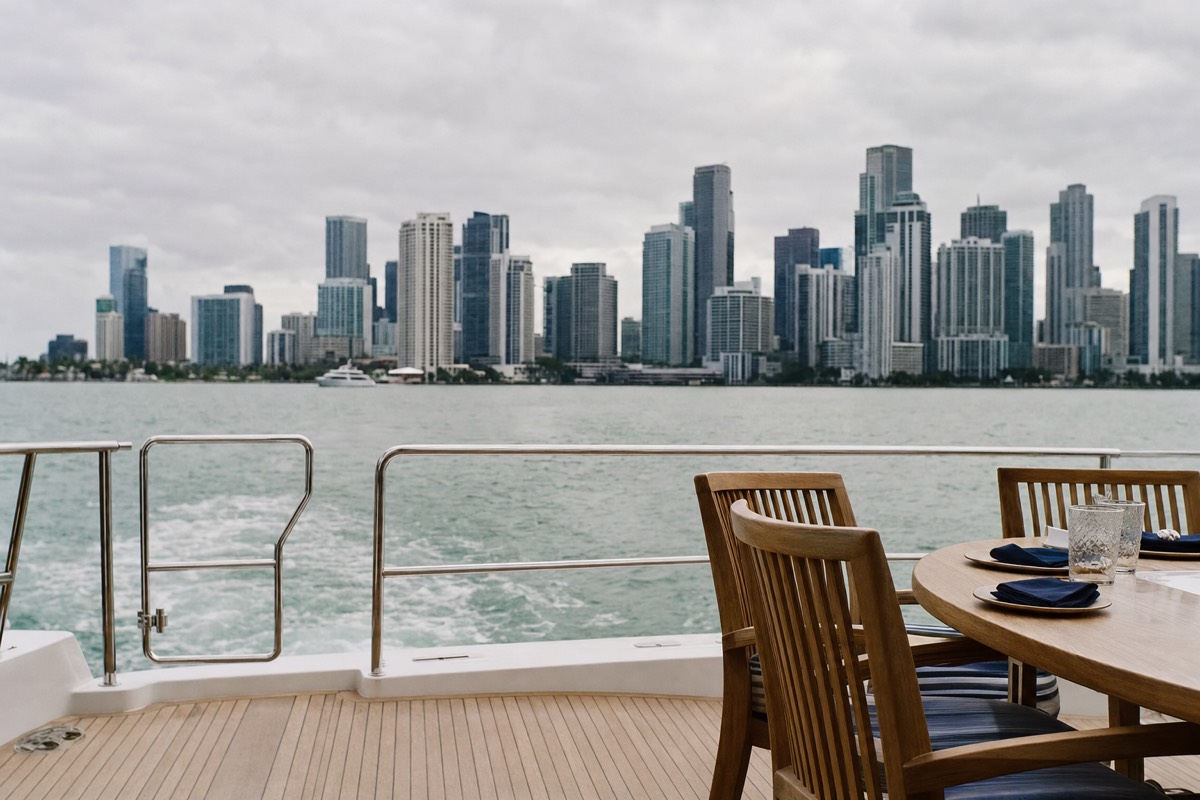
Elegant night is the one evening on a cruise where the dress code stops being a suggestion. Most large cruise lines publish a short list of prohibited items for their formal or elegant evenings, and it is remarkably consistent across the industry: no swimwear, no flip-flops, no shorts, no athletic wear, no ripped or distressed clothing in the main dining room. Miami dinner cruises, which are far more casual than ocean liners, borrow loosely from the same playbook but enforce almost none of it. This article covers what is actually banned on elegant nights, why those bans exist, how strictly crew members apply them, and how the rules change when your "cruise" is a two-hour boat out of Bayside Marketplace rather than a seven-day Caribbean sailing.
What is not allowed in the cruise elegant dress code?
The standard bans on cruise elegant nights are swimwear and pool attire, flip-flops and beach sandals, shorts, athletic wear and team jerseys, baseball caps, tank tops on men, ripped or overly distressed jeans, and clothing with offensive graphics. Torn, stained, or visibly beach-oriented clothing of any kind is also off the list. Enforcement is at the door of the dining room, not ship-wide, and it is looser than most travelers expect.
The reasoning behind the list is less about snobbery than photography and shared space. Elegant night is the evening the ship's photographers set up portraits in the atrium and the main dining room runs its premium menu. Passengers in board shorts and tank tops break the visual tone the line is selling, so the prohibited items cluster around one idea: anything that reads "I came from the pool" or "I came from the gym."
That is why the bans are so uniform. Swimwear, cover-ups worn as clothing, and wet clothing are prohibited almost everywhere. Shorts make the list because they are the single most common point of confusion, and most lines now state plainly that shorts are not permitted in the main dining room on elegant night, even tailored dress shorts. Athletic wear, including leggings worn as pants, sports jerseys, and sneakers with obvious gym styling, is excluded. Footwear is the item people trip over most: flip-flops, water shoes, and beach sandals are out, while dress sandals for women are usually tolerated.
There is a second tier of items that are discouraged rather than banned, and cruise lines word it carefully. Baseball caps and visors are asked to be removed indoors. Excessively revealing clothing, including visible underwear and swimwear cover-ups without actual clothing underneath, falls under most lines' general dress code language even when it is not named on the elegant night list. Offensive slogans or graphics on T-shirts are prohibited under the everyday dress code, which carries over.
Where the list gets genuinely strict is the main dining room and specialty restaurants on elegant night. Buffet venues, casual pool grills, and room service have no such restriction, which is the escape hatch most lines quietly offer. If you do not want to dress up, the practical answer is not to argue with the host at the door, it is to eat somewhere the code does not apply.
If you are sailing out of Miami rather than on an ocean liner, the whole framework relaxes. A Biscayne Bay dinner or sunset cruise is an evening event, so operators appreciate smart-casual effort, but nobody is turning away a passenger in nice shorts and a polo. The Miami Skyline Cruise with Biscayne Bay views and city lights runs 1 hour 20 minutes, holds a 4.6 rating across 1,460 reviews, and starts from $25, which tells you the crowd skews relaxed tourist rather than black-tie. Checked September 2026. The same logic applies to the Miami Sunset and City Lights Cocktail Cruise with open bar, a 2-hour sailing with a 4.6 rating from 1,229 reviews at $69 and up. Neither has a published dress code at all.
Do flip-flops, shorts, and swimwear really get you turned away?
On large cruise lines, yes, but only at the main dining room entrance on elegant night, and usually with an offer to seat you elsewhere rather than a refusal of service. On Miami dinner cruises and small-boat evening sailings, almost never. The smaller the vessel and the shorter the trip, the more the dress code becomes a suggestion.
The enforcement reality is more diplomatic than the published rules suggest. Crew members at the dining room door on Carnival, Royal Caribbean, Norwegian, and similar lines are instructed to politely note violations and offer alternatives, not to escalate. A passenger in shorts on elegant night will typically be reminded of the code and either asked to change or directed to the buffet. Actual refusal of boarding or dining is rare and reserved for the extreme end: wet swimwear, bare feet, or offensive clothing.
There are a few categories where the enforcement is genuinely hard rather than soft. Footwear is the one that surprises people, because "no flip-flops" is applied more consistently than "no shorts" on many ships. Bare feet are prohibited everywhere on the vessel for safety, not style, and that rule is not negotiable. Swimwear is the other hard line: the main dining room on elegant night will not seat a passenger in a wet suit or a bikini with a cover-up, period.
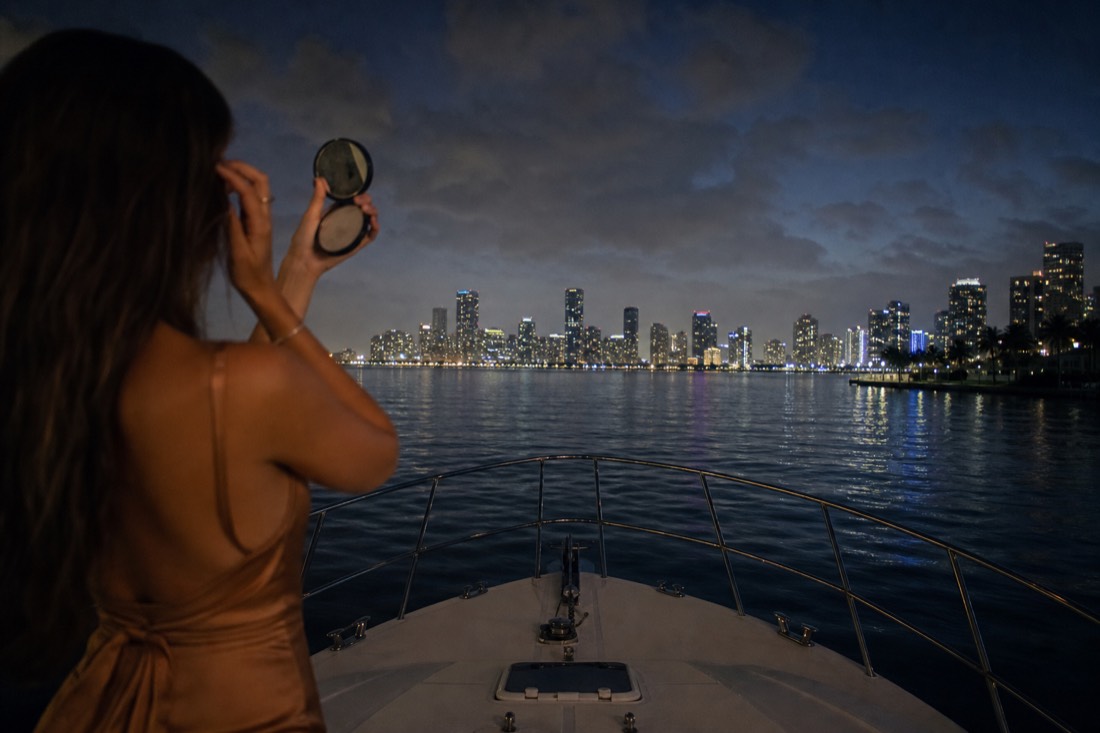
The Miami small-boat world operates on an entirely different axis. The operators running evening cruises out of Bayside Marketplace, including family-run fleets like Fiesta Cruises of Miami (operating since 1995) and Miami Aqua Tours (running US Coast Guard certified vessels since 1999), sell a two-hour experience to a mixed crowd of tourists, families, and date-night couples. Their practical guidance is weather-driven rather than fashion-driven. The open upper decks on these boats mean you want shoes that will not slide on a wet deck and a layer for the bay breeze, which is a safety and comfort conversation, not an elegance conversation.
That is the honest distinction to hold onto: on a big ship, elegant night is a themed event the line curates. On a Miami dinner cruise, "dress code" mostly means "wear something you will be comfortable in for two hours on the water, and bring a jacket." If you want a fuller walkthrough of the casual end of the spectrum, our guide on how to dress for a sunset cruise covers the practical layering question.
What should you wear instead on an elegant night?
The safe elegant-night formula is collared shirts with dress pants or dark jeans for men, dresses, skirts, or dressy separates for women, and closed-toe shoes or dress sandals. Anything you would wear to a nice restaurant on land qualifies. You do not need a gown or a tuxedo unless the specific sailing calls for it, and "smart casual" is the fallback that clears every published dress code.
The gap between what people fear and what is required is wide. Modern cruise elegant nights have drifted formal-optional on most mass-market lines. A dark suit is welcome but a blazer with dress trousers is fully compliant. For women, a cocktail dress is the classic answer, but a nice blouse with dress pants or an elegant jumpsuit clears the bar everywhere. The lines themselves describe the standard as "dressy" rather than "formal," and the prohibited list is the real specification: clear the bans and you are compliant.
Footwear deserves its own sentence because it is the most common failure point. Closed-toe dress shoes, loafers, heels, wedges, and dress sandals all pass. Rubber flip-flops, pool slides, and water shoes do not. If you are packing light for a Miami pre-cruise stay, one pair of versatile shoes that works for dinner and for a boat deck solves the elegant night problem and the Biscayne Bay problem at once.
| Prohibited on elegant night | Usually accepted | Safe for Miami dinner cruises |
|---|---|---|
| Swimwear and pool cover-ups | Dressy jumpsuits and separates | Same as everyday smart-casual |
| Flip-flops and beach sandals | Dress sandals, loafers, heels | Flat shoes with grip for wet decks |
| Shorts of any length | Dress pants, dark jeans, skirts | Nice shorts generally fine |
| Athletic wear and jerseys | Blouses, cocktail dresses | Polos, sundresses, light layers |
| Baseball caps indoors | Hair accessories, discreet hats | Wind layer for the upper deck |
| Ripped or distressed clothing | Pressed, intact clothing | Anything comfortable for 2 hours |
The Miami-specific version of the table's right column is worth internalizing. Evening temperatures on Biscayne Bay are warm most of the year, so the failure mode here is overdressing for heat, not underdressing for formality. A sundress or a linen shirt with dark trousers is elegant by any standard and survivable in Miami humidity. The one genuine dress-code pressure on a Miami evening cruise is the breeze on the open water once the sun drops, which is why operators and experienced passengers both recommend a light layer regardless of what you wear underneath.
Are jeans, sneakers, and hats banned or just discouraged?
Dark, intact jeans are accepted on elegant night by nearly every major cruise line, while ripped or distressed jeans are not. Clean, non-athletic sneakers sit in a gray zone that most lines tolerate, and hats are the softest ban of all: asked off indoors, rarely enforced with consequences. None of the three will get you removed from a ship.
Jeans are the item the internet argues about, and the argument is mostly outdated. A decade ago denim was broadly excluded from elegant nights. Today the published codes on the major mass-market lines permit jeans in the main dining room on elegant night if they are in good condition, and the prohibited phrasing targets "ripped, torn, or distressed" denim specifically. The distinction that matters is condition and styling: dark, unworn-looking jeans with a dress shirt pass everywhere; faded jeans with frayed hems or deliberate rips fail the written code even though enforcement is inconsistent.
Sneakers split the same way. The ban is on athletic footwear as part of an athletic outfit, not on every shoe with a rubber sole. Minimalist leather sneakers read as casual dress shoes and pass in practice, while running shoes with mesh uppers and visible performance styling are the ones hosts notice. If elegant night matters to you, the safe move is closed-toe dress shoes, but a clean, simple sneaker is a low-risk compromise on most lines.
Hats are the least enforced item on the list. The code asks men to remove caps indoors, which is a courtesy standard borrowed from restaurant practice rather than a genuine prohibition. A passenger who keeps a baseball cap on in the dining room will get a reminder at most. Fashion hats are a different story: fascinators, fedoras, and formal headpieces are part of elegant attire and always welcome, which is why the code wording targets "baseball caps" rather than headwear generally.
The pattern across all three items is that cruise dress codes are written broad and enforced narrow. The written list exists so the crew has authority for the extreme cases, wet swimwear, offensive graphics, bare feet. Everything in the middle is judgment, and crew judgment trends forgiving. The genuinely strict rules on any passenger vessel, large or small, are the safety ones: shoes on, life jacket availability, and following crew instructions, none of which have anything to do with elegance.
How does the dress code differ on a Miami dinner cruise?
Miami dinner cruises have no formal dress code at all. Operators ask for smart-casual at most, and the practical rules are about the marine environment: wear shoes you can walk a wet deck in, bring a layer for the evening breeze, and skip anything that cannot handle wind or spray. Elegant attire is welcome but never required, and nothing gets you turned away except bare feet.
The Miami market is structurally different from the ocean-cruise market, and the dress codes reflect it. A seven-day sailing sells a fantasy that includes a formal evening. A two-hour sunset cruise out of Bayside Marketplace sells an experience, and the operators price and staff it for accessibility. The Miami Sunset and City Lights Cocktail Cruise, for example, is a $69-and-up open-bar evening sail, and its crowd is couples with drinks, not couples in gowns. Checked September 2026. The all-inclusive Vizcaya sunset cruise, with food and drink included over 2 hours, draws the same relaxed mix.
What replaces the elegance standard is a small set of practical rules that come from operating small vessels on open water. Bayside-based fleets like Island Queen Cruises, family-owned and running from Miamarina for more than 75 years, use boats with air-conditioned lower salons and open upper decks, which means the temperature changes the moment you climb the stairs. Miami Aqua Tours runs four US Coast Guard certified vessels with bilingual guides, and their multiple daily departures cover sightseeing, sunset, and party formats, each with a slightly different crowd but none with a dress code.
The private-yacht end of the spectrum is the one place formality reappears, and it reappears because you set it yourself. A private dinner cruise for two on a yacht, departing from Dinner Key Marina in Coconut Grove, is a 3-hour charter where the dress code is whatever the two of you decide. That is the trade: shared public cruises are casual no matter what, private charters are as elegant as you care to make them, and neither has a gate at the dock checking your collar.
If the evening you are imagining is closer to date-night than formal-night, the sunset cocktail cruise with an open bar is the natural fit: 2 hours, a 4.6 rating Checked September 2026. across 1,229 reviews, and a dress code that amounts to "comfortable and camera-ready." For the full planning picture, our guide on what is included in a sunset cruise breaks down what open bar actually covers and what you should expect to pay beyond the ticket.
For a fully catered version of the casual evening, the Vizcaya sunset cruise includes food and drink in the ticket over a 2-hour sailing, and it is the closest thing Miami has to a dinner cruise with a dress code of zero. Whether that one or an open-bar sail is the better fit is exactly the kind of comparison Dinner Cruises Miami was built to answer.
What happens if you show up in prohibited clothing?
On a large cruise ship, the most likely outcome is a polite reminder at the dining room door and an offer to eat at the buffet or change, not denial of service. On a Miami dinner cruise, nothing happens at all, because there is no door check. The only clothing-related refusals that actually occur are bare feet, wet swimwear in dining venues, and offensive graphics.
It is worth being precise about consequences, because travelers often fear a scenario that does not exist. Cruise lines do not remove passengers from the ship for dress code violations, and they do not deny you the meals you paid for. The elegant night code governs venue access, not passage. A passenger in a tank top on formal night eats in the buffet, eats at a casual venue, or orders room service, all of which serve the same food the main dining room serves. The line loses nothing and neither do you.
The escalation path only exists for the extremes, and it is safety-adjacent. Bare feet are prohibited ship-wide because of wet decks and emergencies, and crew will insist on footwear anywhere outside your cabin. Wet swimwear in an indoor dining venue is a hygiene and flooring issue as much as a style one. Offensive graphics fall under conduct policies, and a passenger who argues aggressively about any of it crosses from dress code into behavior, which is where real consequences live.
On Miami's small boats, the question dissolves entirely. Boarding at Bayside Marketplace is a ticket check, sometimes an ID check for open-bar sailings since Florida's drinking age is 21, and a safety briefing. Nobody evaluates your outfit. The crew's clothing-related concern is that you do not slip, which is why the practical advice on any of these vessels is stable shoes over dress shoes, and a windbreaker over a blazer.
That is the honest bottom line for anyone packing for a Miami trip that includes an evening on the water. The skyline cruise that doubles as a dress-rehearsal-free night out, a 1 hour 20 minute Biscayne Bay sailing with city lights and a 4.6 rating across 1,460 reviews from $25, imposes nothing on your wardrobe. Checked September 2026. Save the elegant-night anxiety for the ocean liners, and let the evening sailings where the only real requirement is showing up before the boat leaves the dock do the rest.
Common questions about cruise elegant dress codes
The short version of everything above: cruise elegant nights ban swimwear, flip-flops, shorts, athletic wear, ripped denim, and offensive graphics in the main dining room, enforce it gently at the door, and offer casual venues as the fallback. Miami dinner cruises have no dress code at all, only practical rules about wet decks and evening breeze.
What is not allowed in the cruise elegant dress code?
The standard prohibited items are swimwear and pool cover-ups, flip-flops and beach sandals, shorts, athletic wear and jerseys, tank tops on men, baseball caps indoors, ripped or distressed jeans, and clothing with offensive graphics. These bans apply to the main dining room and specialty restaurants on elegant night, not to the entire ship.
Are jeans allowed on cruise elegant night?
Dark, intact jeans are accepted by most major cruise lines on elegant night. The written bans target ripped, torn, or distressed denim. Pair clean dark jeans with a dress shirt or blazer and you clear the published code on nearly every mass-market line.
Can you wear flip-flops on elegant night?
No, flip-flops and beach sandals are on the prohibited list for main dining room elegant nights on large cruise ships. Dress sandals for women are usually tolerated. On Miami dinner cruises and small-boat evening sailings, footwear is a comfort and safety question rather than a dress code one.
What happens if you break the cruise dress code?
Typically a polite reminder at the dining room entrance and an offer to eat at a casual venue or change. Cruise lines do not remove passengers or deny paid meals over dress code. Only bare feet, wet swimwear in dining venues, and offensive graphics draw firm enforcement.
Is there a dress code on Miami dinner cruises?
No formal one. Miami dinner and sunset cruises out of Bayside Marketplace ask for smart-casual at most, and the practical guidance is about the marine environment: stable shoes for wet decks and a light layer for the evening breeze. Elegant attire is welcome but never required.
Do you have to dress up for a sunset cocktail cruise in Miami?
No. The 2-hour sunset and city lights cocktail cruise with open bar, rated 4.6 across 1,229 reviews, has no published dress code. Checked September 2026. Passengers typically wear smart-casual summer clothing, and the only real requirements are shoes and a valid ID for the open bar.
Related reading: